

The worst of the Covid-19 pandemic may be past us, but the extraordinary events of the last two years will live long in the memory. Not only were our favorite restaurants forced to close for months (many never to reopen), but there were times when we wondered if our days in a busy dining room were over. That has mercifully proven not to be the case, but during that time of uncertainty, many rose to the challenge and started cooking restaurant-quality food in their own kitchens. Some culinary talents have already started to emerge from lockdown, and if you think you’re one of them, there is no better place to start than attempting to emulate your heroes. Here, we take a look at the best Michelin star cookbooks written by the world’s leading chefs.
Mirazur
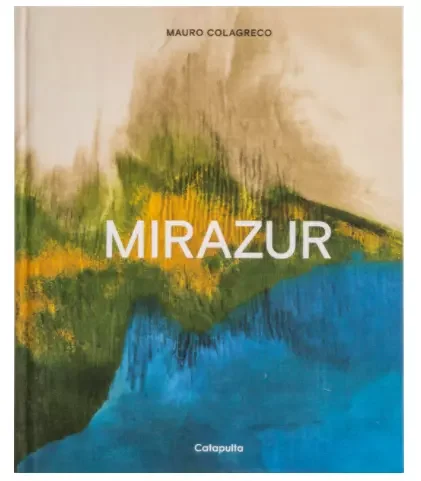
There is only one place to start, and that is with Mirazur. The French restaurant, run by Mauro Colagreco, was awarded top spot in last year’s World’s 50 Best Restaurants and is also a regular inclusion in the Elite Traveler Top 100 Restaurants. The book offers a deep dive into Colagreco’s gastronomic vision and includes 65 of his most famous recipes. It also boasts some stunning photography of the dishes, the restaurant and the beautiful environment that surrounds it. Readers not only have the opportunity to emulate one of the world’s great chefs but can also immerse themselves in one of the most extraordinary culinary cultures in the world.
Alinea
This three-Michelin-star restaurant has topped the Elite Traveler Top 100 Restaurants six times in just eight years. The visionary chef behind it, Grant Achatz released his debut cookbook in 2008. The book went on to win its own awards, and was named the best in the country by Gourmet magazine. The pioneering chef takes readers on a journey of discovery, detailing the meticulous processes behind his spectacular molecular gastronomy. The Michelin star cookbook contains more than 100 dishes and 600 recipes. Recreating some of Achatz’s signature dishes would be a challenge for most professional chefs, but failing that you can still admire the spectacular photography.
The French Laundry
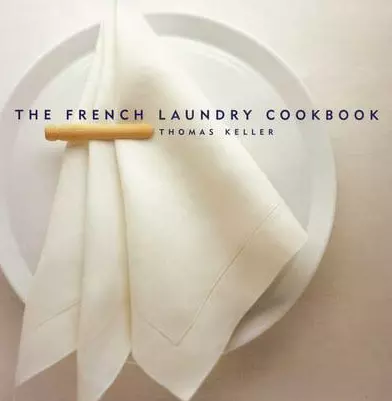
Thomas Keller is one of the most successful fine-dining chefs in North America and The French Laundry is the jewel in his culinary crown. Keller, who has seven Michelin stars across his many restaurants, offers a tantalizing glimpse into his genius in this, his first cookbook. Readers will be enticed by the apparent simplicity of Keller’s cooking methods, offering them a semblance of hope that they might recreate dishes that have earned The French Laundry three Michelin stars. This cookbook, available as a signed edition from Keller’s official website, offers 150 exact recipes from The French Laundry kitchen. That means no process or step is ignored. Keller does not do shortcuts.
Gordon Ramsay Quick and Delicious
Far more than just a TV personality, Gordon Ramsay is one of the UK’s most celebrated chefs, with Restaurant Gordon Ramsay proudly boasting an impressive three Michelin stars. Chef Ramsay’s latest cookbook, Quick and Delicious, calls upon the culinary experience gained throughout his illustrious career to develop 100 recipes that take 30 minutes or less to cook, without ever compromising on flavor. In true Gordon Ramsay style, Quick and Delicious uses straightforward, no nonsense ingredients, but with Gordon’s expertise, they are transformed into something special.
Click here to buy
Eleven Madison Park: The Next Chapter
A previous winner of the World’s Top 50 and a regular Top 10 finisher in the Elite Traveler Top 100 Restaurants, Eleven Madison Park is undoubtedly one of the best restaurants in the world. This cookbook is the second to emerge from Daniel Humm’s New York restaurant and includes 30 new recipes to reflect his ever-changing Michelin star menus. More than a cookbook, this version also contains a number of stories discussing the restaurant’s extraordinary success and other topics such as its recent renovation. Humm also reflects on his top successes, such as earning three Michelin stars, four stars from the New York Times and No 1 at the World’s Top 50. Through it all, readers will also get exclusive insight into the working mind of one of the world’s most revered chefs.
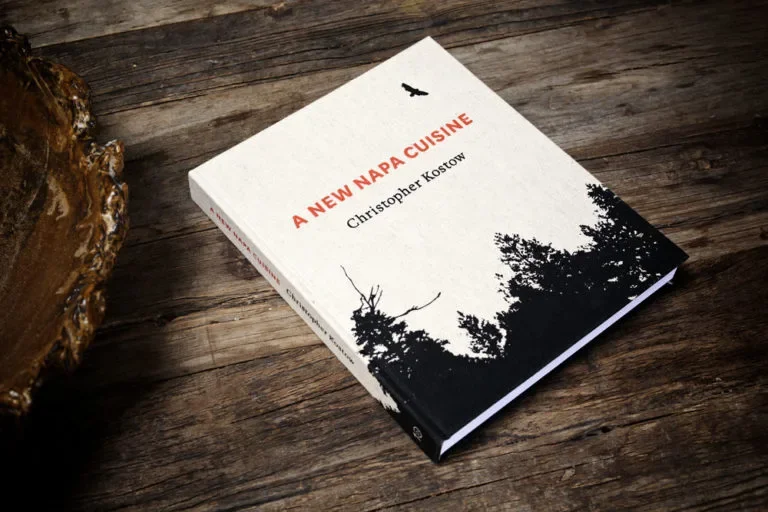
A New Napa Cuisine
This is the debut cookbook from Christopher Kostow, the man behind three-Michelin-starred The Restaurant at Meadowood. Not only a cookbook, A New Napa Cuisine details Kostow’s journey to becoming one of the best chefs in North America. Kostow speaks passionately about Napa Valley and how it changed his perception of cooking and craft. It also celebrates the local producers that play a central role in creating Kostow’s menu, which changes as frequently as the seasons.
Noma: Time and Place in Nordic Cuisine
The Copenhagen restaurant Noma threw Nordic cuisine onto the global stage when it won top spot in the World 50 Best Restaurants in 2010. This cookbook was published on the back of that extraordinary achievement and offers an insight into the working mind of the genius behind it, René Redzepi. Redzepi is obsessed with championing Nordic produce and goes to great lengths to accentuate it in his presentation. He served food on pebbles found in the same fields as the produce and sourced the purest possible water from Greenland. The cookbook includes 90 of Redzepi’s recipes for you to try at home, none of which required pure glacial water from the Arctic Circle.
Never Trust a Skinny Italian Chef
Osteria Francescacana is the most celebrated restaurant in Italy, which, as you can imagine, puts it among the very best in the world. Massimo Bottura is the man behind its extraordinary success and in this cookbook, he details how he went about becoming one of the best chefs in the world. Never Trust a Skinny Italian Chef is a tribute to Bottura’s lifelong dedication to culinary excellence. The book contains 50 of Bottura’s recipes, each accompanied with the inspiration, ingredients and techniques behind them.
White Heat 25
Although first published in 1990, few cookbooks are as enduring as Marco Pierre White’s White Heat 25. The critically acclaimed book blends outspoken opinion, dramatic photographs and classic recipes to create a cookbook like no other – just as Marco Pierre White is a chef like no other. While his relationship with the Michelin guide is strained to say the least (he gave back three of his five stars in 1999), Marco Pierre White remains the youngest British chef to receive three stars for a single restaurant, cementing his status as one of the best cooks of his generation.
Click here to buy now
Momofuku
David Chang was one of the hottest culinary talents in the world when his debut cookbook Momofuku was released in 2010. He has since gone on to build a successful restaurant group, but his original site, Ko, remains one of New York’s prime culinary destinations. The book gives readers the chance to try some of his pioneering fusion cuisine. Chang is famous for blending Korean and Asian flavors with Western techniques, which was well ahead of its time when it first appeared in 2008. Today, the restaurant is as successful as ever and boasts two Michelin stars.
The Big Fat Duck Cookbook
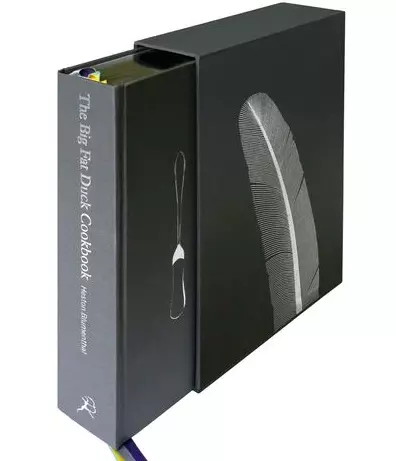
Heston Blumenthal has built a successful career by blending weird science with fine dining. The British chef is famed for his intriguing flavor combinations and pioneering techniques. Think smoky bacon ice cream, snail porridge and liberal use of liquid nitrogen. His unbelievable creations earned his restaurant The Fat Duck three Michelin stars and No 1 spot in the World’s 50 Best Restaurants in 2005.
Within the Big Fat Duck Cookbook, readers will find three separate volumes, starting with Blumenthal’s autobiography. Then there is the complete list of intricate recipes that offer a tantalizing glimpse into the weird and wonderful experiments that take place in The Fat Duck kitchen. Finally, there is perhaps the most vital section of all: the science. Here, readers are given detailed explanations into all of the innovative techniques that Blumenthal uses to produce his menu. Many of them come with a strict ‘Don’t Try This at Home’ label, the reason for which will become pointedly obvious upon reading.
Le Livre Blanc
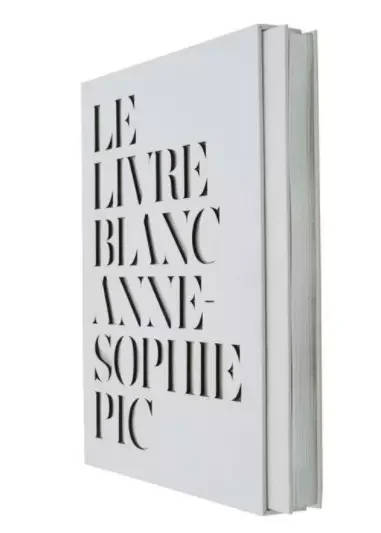
Anne-Sophie Pic is not only the leading female chef in the world, but one of the world’s best in her own right. Pic was awarded the prestigious Chef of the Year in last year’s Top 100 Restaurants in recognition of her extraordinary success. With eight Michelin stars to her name, insight into Pic’s creative mind would be priceless to a budding young chef. Le Livre Blanc offers you that insight for a very reasonable price. With silver-edged paper and crystalline photography, this cookbook could have only come from Pic, who creates some of the most beautiful dishes in the world. You can now learn how to reproduce some of her signature dishes but plating tongs are essential.
[See also: Michelin Star Recipes You Can Make at Home]